Country or region and language

    Choose your country or region and your language.

    Suggested for you

      All countries and regions

        Choose your character

        It shows in the top bar and on your profile. Change it any time.

        AWS AI Practitioner mock exam 1

        Answer 65 original questions in 1 h 30 min. We score every practice item, with a study target of 52 correct. This result doesn't convert to an AWS scaled score.
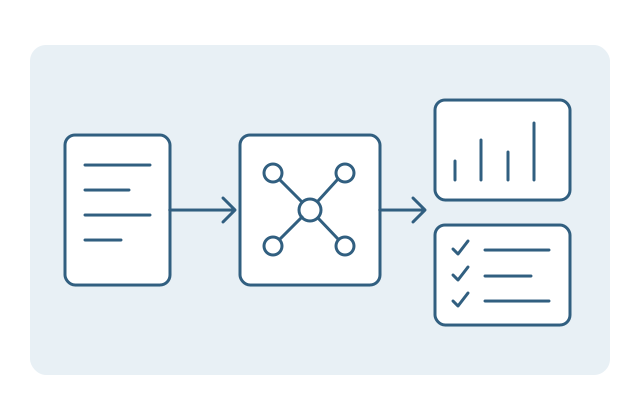
        A data pipeline leading to a model, an evaluation chart and a security checklist for AIF-C01 practice.
        Questions
        65
        Time
        1 h 30 min
        Our practice target
        52 (80%)
        Mode
        Timed or untimed
        Access
        Free

        The practice test needs JavaScript. These are its questions:

        1. A lender trains on applications paired with their known repayment outcomes. Which learning method fits?

          1. Unsupervised learning
          2. Supervised learning
          3. Unsupervised clustering
          4. Reinforcement learning
        2. A repair company predicts the number of hours a new repair will take. Which task is this?

          1. Unsupervised clustering
          2. Reinforcement learning
          3. Categorical classification
          4. Continuous-value regression
        3. A warranty system assigns each claim to either eligible or ineligible. Which task fits?

          1. Continuous-value regression
          2. Unsupervised learning
          3. Unsupervised clustering
          4. Categorical classification
        4. A warehouse robot improves its route policy using rewards for completed deliveries and penalties for collisions. Which learning method fits?

          1. Unsupervised learning
          2. Supervised learning
          3. Categorical classification
          4. Reinforcement learning
        5. An archive needs written transcripts of recorded interviews. Which managed service fits?

          1. Amazon Comprehend
          2. Amazon Transcribe
          3. Amazon Polly
          4. Amazon Translate
        6. A retailer wants sentiment and named entities extracted from written product reviews. Which service fits?

          1. Amazon Lex
          2. Amazon Comprehend
          3. Amazon Polly
          4. Amazon Transcribe
        7. A supplier scores all accumulated invoices overnight and needs no immediate response. Which inference mode fits?

          1. Real-time inference
          2. Model training
          3. Reinforcement learning
          4. Batch inference
        8. Missing a truly fraudulent claim is especially costly. Which metric directly measures the fraction of actual fraud cases found?

          1. Overall prediction accuracy
          2. Positive-case detection rate
          3. Positive-prediction precision
          4. Combined F1 score
        9. A model nearly memorizes its training records. What should the team use to assess generalization before release?

          1. Held-out evaluation data
          2. Model training
          3. Business return on investment
          4. Production drift monitoring
        10. A tax invoice must apply a fixed statutory percentage exactly, with no prediction. Which approach fits?

          1. Deterministic rules
          2. Unsupervised clustering
          3. Supervised learning
          4. Continuous-value regression
        11. Historical tickets have known yes/no escalation labels. Select TWO concepts describing the learning setup and prediction task.

          1. Reinforcement learning
          2. Categorical classification
          3. Supervised learning
          4. Continuous-value regression
          5. Unsupervised learning
        12. Match each description to the corresponding concept. Use every option once.

          1. Convert recorded speech to text
          2. Generate spoken audio from written text
          3. Convert written content between languages
          1. Amazon Translate
          2. Amazon Transcribe
          3. Amazon Polly
        13. For this supervised-learning release, each step needs the output of the preceding step. Order the steps from preparation to monitoring.

          1. Train using the training split
          2. Prepare and split labeled data
          3. Deploy the approved model and monitor outcomes
          4. Evaluate the trained model on held-out data
        14. One broadly pretrained model is adapted for summarization, question answering and drafting. Which model category fits?

          1. Continuous-value regression
          2. Categorical classification
          3. Foundation model
          4. Unsupervised clustering
        15. A bill counts the small text units processed for a model request, which need not be whole words. What are those units?

          1. Embedding vector
          2. Token
          3. Context window
          4. Document chunking
        16. A search system represents paragraphs as numeric vectors and compares their meaning. Which representation is used?

          1. Embedding vector
          2. Diffusion model
          3. Transformer architecture
          4. Token
        17. An application sends an image together with text to a model that understands both. What capability is required?

          1. Token
          2. Categorical classification
          3. Multimodal model
          4. Diffusion model
        18. A generative image system learns to reverse progressive noise addition. Which model family does this describe?

          1. Diffusion model
          2. Transformer architecture
          3. Embedding vector
          4. Unsupervised clustering
        19. A developer needs a standardized connection between an assistant and external data tools. Which protocol fits?

          1. Model training
          2. Diffusion model
          3. MCP
          4. Supervised fine-tuning
        20. A travel assistant plans several steps and calls permitted booking tools to complete a goal. Which pattern fits?

          1. Embedding vector
          2. Token
          3. Tool-using agent
          4. Categorical classification
        21. A fluent answer invents a nonexistent refund policy. Which limitation has appeared?

          1. Response latency
          2. Hallucination
          3. Provisioned capacity
          4. Token charges
        22. A team compares models for its own languages, response-time limits and task quality before choosing one. Which approach fits?

          1. Provisioned capacity
          2. Pretraining from scratch
          3. Task benchmark
          4. Token
        23. A company wants managed API access to several providers of foundation models without managing model-serving servers. Which service fits?

          1. Amazon Bedrock
          2. Amazon Rekognition
          3. Amazon Polly
          4. Amazon Lex
        24. An ML team wants a catalog of pretrained models and solution templates it can deploy in SageMaker AI. Which feature fits?

          1. Amazon Comprehend
          2. Amazon Translate
          3. Amazon Transcribe
          4. JumpStart
        25. An API uses token-based billing. Which factor must a cost forecast include for prompts and generated answers?

          1. Overall prediction accuracy
          2. Token charges
          3. Positive-case detection rate
          4. Positive-prediction precision
        26. A pilot saves staff hours but also incurs integration and inference charges. Which measure assesses the net business value?

          1. Business return on investment
          2. BLEU
          3. ROUGE
          4. Embedding vector
        27. A pilot needs separate measures of token-based inference expense and response waiting time. Select TWO.

          1. Token charges
          2. Positive-case detection rate
          3. Combined F1 score
          4. Response latency
          5. Overall prediction accuracy
        28. Match each description to the corresponding concept. Use every option once.

          1. A small text unit processed by a language model
          2. A numeric representation for comparing semantic similarity
          3. Divide long documents into smaller retrievable passages
          1. Embedding vector
          2. Token
          3. Document chunking
        29. A foundation-model pilot has a defined use case. Order this evaluation-dependent selection process.

          1. Select candidate models that satisfy required modalities
          2. Define quality, cost and latency acceptance criteria
          3. Deploy the candidate approved from evaluation evidence
          4. Evaluate candidates against the defined criteria
        30. Answers must use internal policy documents updated daily, without retraining model weights. Which design fits?

          1. Supervised fine-tuning
          2. RAG
          3. Pretraining from scratch
          4. Model distillation
        31. A knowledge base retrieves passages whose embeddings are closest to the question embedding. What operation is this?

          1. Vector similarity search
          2. Continuous-value regression
          3. Categorical classification
          4. Unsupervised clustering
        32. A team has reviewed input-output examples and wants to update a model to follow its support response style. Which customization fits?

          1. RAG
          2. Supervised fine-tuning
          3. Model distillation
          4. Pretraining from scratch
        33. A prompt says to classify a note into one of four labels but supplies no demonstrations. Which prompting technique is used?

          1. Few-shot prompting
          2. Supervised fine-tuning
          3. One-shot prompting
          4. Zero-shot prompting
        34. A prompt includes several example requests and correctly formatted replies before the new request. Which technique is used?

          1. One-shot prompting
          2. Pretraining from scratch
          3. Zero-shot prompting
          4. Few-shot prompting
        35. A supported model should produce less varied samples from the same prompt. Which inference adjustment generally helps?

          1. Output token limit
          2. Context window
          3. Token charges
          4. Lower temperature
        36. A team wants a hard cap on generated response length. Which setting directly addresses this?

          1. Output token limit
          2. Lower temperature
          3. Embedding vector
          4. Context window
        37. A summarization benchmark compares generated summaries with reference summaries using text overlap. Which metric fits?

          1. Response latency
          2. ROUGE
          3. Token charges
          4. BLEU
        38. A translation benchmark measures n-gram overlap against reference translations. Which metric fits?

          1. BLEU
          2. Overall prediction accuracy
          3. Response latency
          4. ROUGE
        39. A smaller student model learns from the outputs of a larger teacher to reduce serving resources. Which approach fits?

          1. Model distillation
          2. Supervised fine-tuning
          3. RAG
          4. Pretraining from scratch
        40. Fine-tuning records contain inconsistent labels and omit a major customer segment. What should happen before training?

          1. Token charges
          2. Data review
          3. Context window
          4. Provisioned capacity
        41. Several teams reuse the same instructions with different customer variables and need traceable releases. What should they manage?

          1. Prompt template
          2. Pretraining from scratch
          3. Model distillation
          4. Supervised fine-tuning
        42. A RAG evaluator asks whether every answer claim is supported by the retrieved policy passages. Which property is assessed?

          1. Response latency
          2. Token charges
          3. Provisioned capacity
          4. Groundedness
        43. An agent benchmark checks whether each authorized refund workflow reaches the correct final state. Which business metric fits?

          1. Task completion rate
          2. ROUGE
          3. Response latency
          4. BERTScore
        44. A model rejects a request because the combined document and requested response exceed its token capacity. Which limit matters?

          1. Response latency
          2. Lower temperature
          3. Output token limit
          4. Context window
        45. A design needs fresh source passages at inference time and retrieval by embedding similarity. Select TWO approaches that directly meet these needs.

          1. Model distillation
          2. Pretraining from scratch
          3. Vector similarity search
          4. RAG
          5. Supervised fine-tuning
        46. Match each description to the corresponding concept. Use every option once.

          1. Give task instructions with no worked example
          2. Include exactly one worked input-output example
          3. Include several worked input-output examples
          1. Zero-shot prompting
          2. Few-shot prompting
          3. One-shot prompting
        47. A RAG application has an indexed knowledge base. Order the online query flow.

          1. Encode the user question for retrieval
          2. Generate an answer using the supplied context
          3. Build a prompt containing the retrieved evidence
          4. Retrieve relevant indexed passages
        48. A screening model has strong overall accuracy but much higher false rejection rates for one demographic group. What evaluation is needed?

          1. Fairness review
          2. Response latency
          3. Token charges
          4. Overall prediction accuracy
        49. A Bedrock application needs configured filters for harmful content before showing a response. Which feature fits?

          1. AWS Config
          2. Amazon Bedrock Guardrails
          3. Amazon Inspector
          4. AWS Artifact
        50. A customer asks which input factors influenced a particular rejected application. Which capability addresses this?

          1. Token charges
          2. Response latency
          3. Explainability
          4. Provisioned capacity
        51. A risk reviewer needs one record of model purpose, evaluations, limitations and intended use. Which feature fits?

          1. AWS PrivateLink
          2. Model Cards
          3. CloudTrail
          4. Amazon Macie
        52. A team wants to train on purchased images but has not checked whether the contract permits model training. What review comes first?

          1. Rights review
          2. Overall prediction accuracy
          3. Provisioned capacity
          4. Lower temperature
        53. Two models meet the same quality target. The company wants the option with lower measured resource use. What selection criterion fits?

          1. Pretraining from scratch
          2. Provisioned capacity
          3. Resource efficiency
          4. Context window
        54. A system proposes consequential account closures. The organization requires a person to authorize each closure. What safeguard fits?

          1. Embedding vector
          2. Human approval
          3. Lower temperature
          4. Token
        55. Select TWO controls directly addressing unequal errors across demographic groups and users being unable to challenge a decision.

          1. Fairness review
          2. Token charges
          3. Provisioned capacity
          4. Appeal channel
          5. Response latency
        56. Match each description to the corresponding concept. Use every option once.

          1. Let users challenge a consequential decision
          2. Describe factors behind a particular prediction
          3. Document model purpose, evaluation and limitations
          1. Model Cards
          2. Appeal channel
          3. Explainability
        57. An assistant needs read-only access to one S3 prefix. What access design avoids granting account-wide administration?

          1. AWS KMS
          2. AWS PrivateLink
          3. Least-privilege IAM
          4. TLS
        58. A project needs centrally managed cryptographic keys for stored training records. Which control fits?

          1. Least-privilege IAM
          2. AWS PrivateLink
          3. TLS
          4. AWS KMS
        59. A security review requires protection while prompts travel from the client to a service endpoint. Which control fits?

          1. Amazon Macie
          2. TLS
          3. AWS Artifact
          4. AWS KMS
        60. An organization wants to discover sensitive personal information in its S3 buckets before model use. Which service fits?

          1. Amazon Inspector
          2. AWS Artifact
          3. Amazon Macie
          4. AWS Config
        61. An investigator needs the history of account API activity showing who invoked an operation and when. Which service fits?

          1. AWS Config
          2. CloudTrail
          3. Amazon Macie
          4. AWS Artifact
        62. A compliance team needs AWS third-party audit reports and agreements. Where should it look?

          1. AWS Artifact
          2. AWS Config
          3. Amazon Inspector
          4. CloudTrail
        63. A model returns a tool argument requesting a payment outside the user permission. What must application code enforce?

          1. Lower temperature
          2. Provisioned capacity
          3. Token charges
          4. Action validation
        64. An agent may invoke only approved tools with authorized argument values. Select TWO controls that restrict permissions and validate each requested action.

          1. Action validation
          2. TLS
          3. Least-privilege IAM
          4. Amazon Macie
          5. AWS KMS
        65. An access review requires controls derived from a documented data policy. Order the review before approving production access.

          1. Authorize production access after the review passes
          2. Identify the applicable data and access obligations
          3. Define controls that satisfy those obligations
          4. Verify evidence that the defined controls operate

        What this set covers

        • 1.1: Fundamentals4 questions
        • 1.2: Fundamentals6 questions
        • 1.3: Fundamentals3 questions
        • 2.1: Generative models10 questions
        • 2.2: Generative models4 questions
        • 2.3: Generative models2 questions
        • 3.1: Model applications7 questions
        • 3.3: Model applications3 questions
        • 3.2: Model applications4 questions
        • 3.4: Model applications4 questions
        • 4.1: Responsible use6 questions
        • 4.2: Responsible use3 questions
        • 5.1: Security and governance6 questions
        • 5.2: Security and governance3 questions

        Next: AIF-C01 mock 2

        More practice for this exam

        1. AIF-C01 mock 265 questions · 1 h 30 min

        All practice for the AWS Certified AI Practitioner (AIF-C01)

        The Work Gym is independent of Amazon Web Services. AWS and its service names are trademarks of Amazon.com, Inc. or its affiliates. Our original practice doesn't provide an official exam, voucher or certification.

        Your Work Gym account

        Save your progress and pick up on another device. Your browser's progress comes with you.

        New accounts get 12 hours of full access: every course, unit, project and exam. The clock starts when you open your first lesson.

        Plan your practice from a job ad or syllabus

        Have a referral code?

        or

        You can keep practicing without an account.

        Change your plan

        Checking the price

        Help and feedback

        Ask a question, tell us what is not working, or share an idea. We reply by email.

        What is it about?

        We use it only to reply to you.